
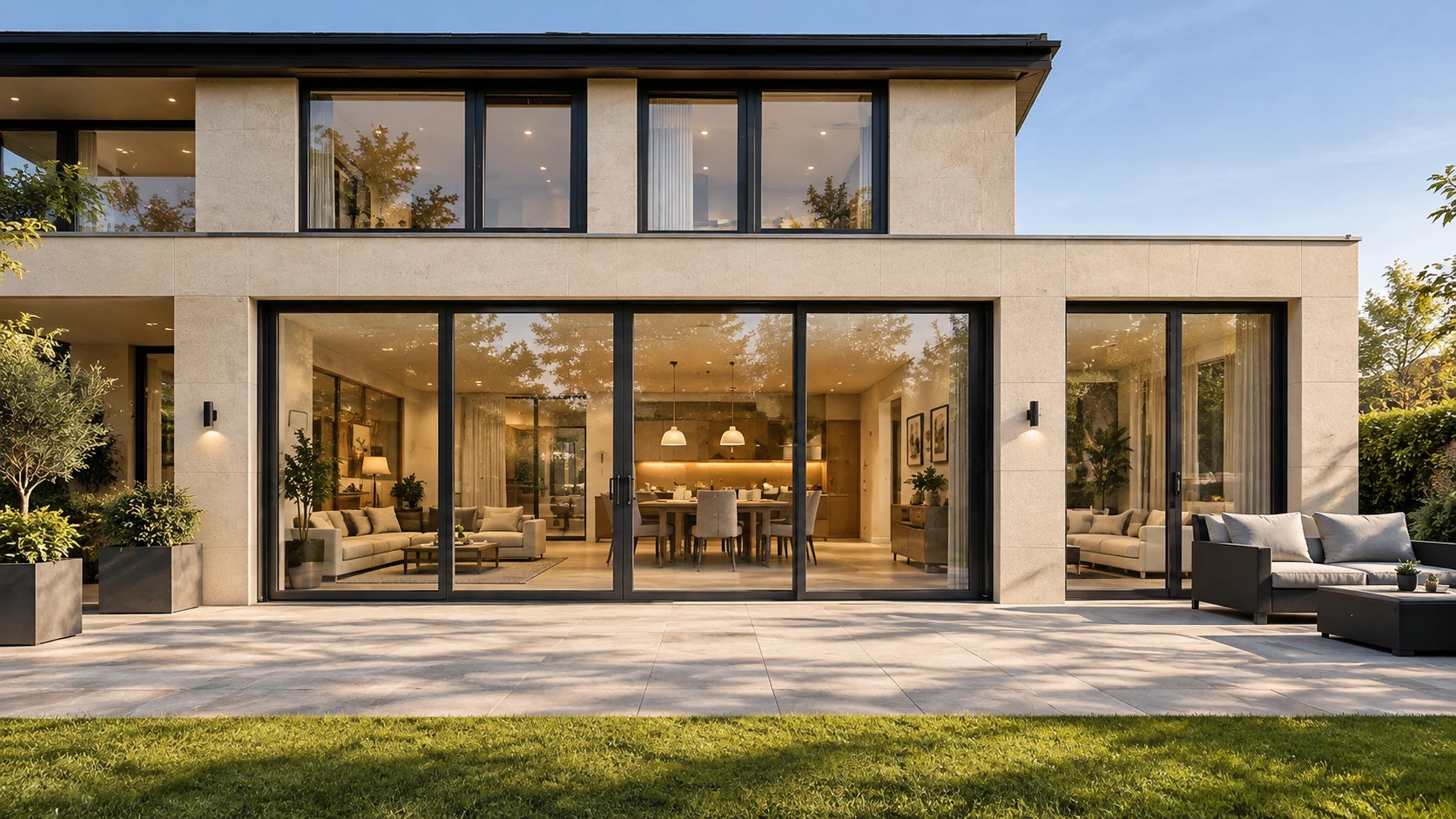
Drive through any upscale residential enclave today—whether in New Delhi, Chandigarh, or the outskirts of Ludhiana—and a quiet architectural revolution is impossible to miss. The grand neoclassical boundary walls and modest punch windows that once defined high-end estates are disappearing. In their place stand striking contemporary villas wrapped in vast, floor-to-ceiling glass envelopes.
What was once considered an impractical avant-garde experiment is now the universal signature of modern luxury architecture. Discerning homeowners and architects are moving decisively away from enclosed masonry boxes toward transparency, open horizons, and seamless indoor-outdoor living. But why is this dramatic transformation taking place?
Luxury Is No Longer About Bigger Walls
For decades, residential prestige was expressed through monumental stone facades and heavy ornamentation. Today, the definition of luxury has fundamentally shifted from physical mass to spatial freedom. Modern homeowners prioritize residences that feel open, weightless, and intimately connected to their surrounding environment.
Expansive glass walls dissolve visual boundaries, making interior rooms feel as boundless as the landscape outside. Instead of confining inhabitants within dark, compartmentalized spaces, contemporary architecture embraces natural flow, visual tranquility, and clean architectural sightlines that frame the outdoors as living artwork.
The Psychology of Natural Light
Natural daylight fundamentally shapes the comfort and emotional atmosphere of a home. Daylight illuminates authentic textures—whether hand-dressed stone, warm timber paneling, or brushed metal finishes—with a vibrancy that artificial lighting cannot replicate.
Spaces filled with natural light feel inherently welcoming, serene, and expansive. As ambient light transitions from dawn's golden hues to dusk's cool tones, the internal character of the home continuously evolves. Floor-to-ceiling glass fosters an intuitive bond with natural daily rhythms, creating a restorative living sanctuary removed from the demands of urban life.
The Rise of Floor-to-Ceiling Glass
This design evolution has been made possible by significant advancements in structural glazing and profile engineering. Early residential architecture relied on small glass panes because traditional annealed sheets lacked impact resistance and bulky wooden frames disrupted sightlines.
Today, high-strength structural glazing and precision-engineered aluminium profiles support massive continuous spans reaching upwards of three to four metres. Minimalist luxury sliding glass doors glide effortlessly along recessed tracks, eliminating visual and physical barriers between rooms. These slender architectural systems easily handle substantial wind loads while maintaining crisp, clean geometry across every facade.
Indoor and Outdoor Living Are Becoming One
In modern villa architecture, external amenities—inner courtyards, manicured lawns, wrap-around timber decks, and swimming pools—are treated as natural continuations of primary interior spaces.
When full-height glass panels slide into concealed wall pockets, interior living areas transition effortlessly into expansive open-air terraces. This seamless synergy is particularly delightful during refreshing autumn mornings and pleasant spring evenings. Even when closed during inclement weather, clear glass ensures tranquil garden vistas and water reflections remain ever-present centerpieces of daily living.
But Can an Almost-All-Glass Home Work in India?
A common hesitation among homeowners in India is climatic suitability: can an expansive glass residence perform effectively under intense summer heat? The answer depends entirely on thoughtful building orientation and advanced glazing science rather than simply installing more glass.
Thoughtful architectural design integrates passive shading—such as cantilevered roof overhangs, vertical architectural fins, and conscious solar orientation—alongside high-performance architectural glass systems. Double Glazed Units (DGU) equipped with spectrally selective Low-E coatings reflect intense solar infrared radiation while welcoming abundant visible daylight. Paired with acoustic laminated interlayers and thermally insulated frames, contemporary glass villas remain comfortable, tranquil, and remarkably energy-efficient throughout the peak of Punjab's summer season.
The Future of Luxury Architecture
Modern glass house design is not a temporary stylistic fad; it reflects an enduring cultural evolution toward lighter, more mindful, and harmoniously connected spaces. As precision processing and energy-efficient glazing continue to advance, residential architecture will continue shedding superfluous mass.
For homeowners creating generational residences, transparency, precision engineering, and performance-certified architectural glass products define the modern standard of residential luxury.
Frequently Asked Questions
Why do modern luxury houses use so much glass?
Modern luxury villas use expansive glass to maximize natural daylight, create seamless indoor-outdoor connectivity, and visually expand interior spaces. Large glazing panels transform outdoor landscaping into a dynamic living backdrop while delivering an airy, minimalist aesthetic.
Are glass houses suitable for Indian weather?
Yes, modern glass houses are entirely viable across Indian climates when engineered correctly. Using double-glazed units (DGU) with solar-reflective Low-E coatings, thermal-break aluminium frames, and architectural overhangs prevents excessive heat gain while maintaining interior comfort and energy efficiency.
Does floor-to-ceiling glass make a house hotter?
Standard single-pane glass will increase indoor heat, but modern high-performance insulated glass prevents it. Insulated double glazing filled with argon gas and solar-control coatings blocks up to 70% of infrared solar radiation, keeping interiors cool.
Is glass safe for large luxury villa windows?
Yes. Large architectural glass installations utilize thermally toughened safety glass and multi-layer laminated glass. These engineered panels withstand severe wind pressures, accidental impacts, and intrusion attempts, ensuring complete structural stability and occupant safety.
What type of glass is best for modern luxury homes?
Double Glazed Units (DGU) featuring toughened Low-E glass and laminated safety glass are ideal for modern luxury homes. They provide the perfect balance of thermal insulation, solar heat reduction, acoustic damping, and maximum structural safety.
Design Your Architectural Glass Villa
Explore high-performance insulated glazing, custom laminated configurations, and minimal aluminium sliding systems at Shiva Glass Group.