
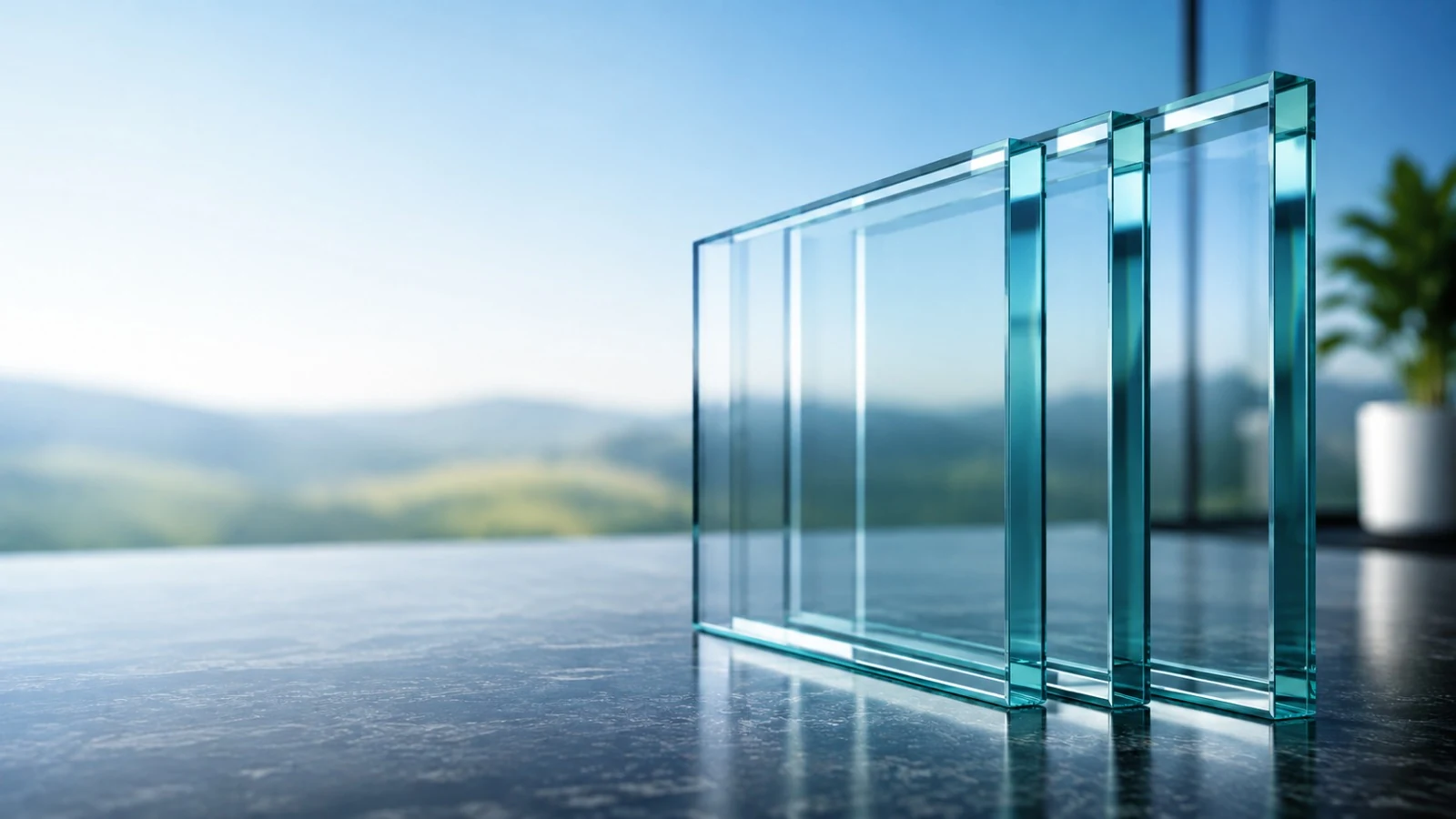
Modern architecture prioritizes daylight, transparency, and seamless visual connectivity between indoor and outdoor environments. From soaring multi-storey structural façades to minimalist interior glass enclosures, glass has evolved from a passive fenestration infill into a core load-bearing and protective architectural element.
Central to this transformation is toughened glass (also commonly referred to as tempered glass). By undergoing specialized thermal processing, standard float glass gains significantly enhanced structural resilience and a controlled safety breakage pattern, making it one of the most widely specified glazing materials across residential, commercial, and public infrastructure projects.
What Is Toughened Glass?
Toughened glass (also commonly known as tempered glass) is a high-strength architectural safety glass physically processed through uniform thermal heating and rapid air quenching, producing balanced compressive surface stresses that make it 4 to 5 times stronger than standard float glass and cause it to fracture into blunt granular dice upon impact.
It is manufactured by subjecting pre-cut annealed float glass to extreme thermal treatment in a specialized tempering furnace. The glass is uniformly heated to approximately 620°C to 650°C—approaching its softening point—and then immediately quenched with high-pressure jets of cold air.
This rapid quenching chills the outer surfaces far more swiftly than the inner core. As the interior gradually cools and contracts, it exerts a powerful pull on the solidified exterior. This phenomenon locks the external surfaces into a permanent state of high compressive stress, balanced by tensile stress inside the glass core.
Key Benefits of Toughened Glass
The thermodynamic properties induced by tempering deliver distinct functional advantages that make toughened glass indispensable in contemporary architecture:
Mechanical Strength
Typically 4 to 5 times stronger against surface physical impacts and mechanical bending loads than standard annealed glass of equivalent thickness.
Thermal Stress Resistance
Withstands substantial temperature differentials (up to approximately 200°C to 250°C), preventing thermal shock fractures commonly caused by direct solar radiation.
Safety Fragmentation
If subjected to impact exceeding its load capacity, the glass fractures into thousands of small, relatively blunt granular dice rather than hazardous jagged shards.
Architectural Versatility
Can be combined with ceramic frit printing, low-iron clarity substrates, frosted textures, acoustic interlayers, and double-glazed insulated units (DGU).
Where Is Toughened Glass Used?
Building safety codes require safety glazing in designated human-impact and high-stress zones. Common architectural implementations include:
Pivot doors, patch-fitted entrance systems, and floor-spring assemblies.
Frameless walk-in screens and hinged panels exposed to moisture and daily contact.
Acoustic and executive office glass walls offering visual light transmission.
Balcony balustrades and staircase barriers (frequently laminated for overhead duty).
Storefronts, display cases, glass canopies, and partition divider systems.
High-wind load curtain walls, windows, and energy-efficient DGU assemblies.
Toughened Glass vs Ordinary Glass
Ordinary float glass (annealed glass) cools slowly during manufacturing to relieve internal stresses. While easy to cut and glaze on-site, it lacks the mechanical resilience and safety fragmentation required for high-risk zones:
| Parameter | Toughened (Tempered) Glass | Standard Float (Annealed) Glass |
|---|---|---|
| Bending & Impact Strength | High (4–5× greater resistance) | Standard baseline resistance |
| Fracture Pattern | Small, relatively blunt granular dice | Large, sharp, knife-like shards |
| Thermal Differential | Resists gradients up to ~250°C | Prone to fracture above ~40°C–60°C gradient |
| Post-Manufacture Fabrication | Cannot be cut, drilled, or edge-worked | Can be cut and modified on-site |
| Recommended Application | Doors, railings, partitions, human impact areas | Standard picture frames, low-risk small windows |
Choosing the Right Glass for Your Project
Selecting the appropriate glass specification involves balancing structural loads, safety regulations, and environmental exposures:
- Glass Thickness & Panel Span: Panel thickness (typically ranging from 4 mm to 19 mm) must be calculated according to wind load pressures, unsupported panel height, and structural deflection limits.
- Overhead and High-Fall Hazard Glazing: For overhead skylights, high-level balustrades, or glass flooring, building codes generally mandate toughened laminated glass. In such configurations, even if a tempered pane shatters, the PVB/SGP interlayer retains the granular particles in place to prevent immediate collapse.
- Edge Quality & Thermal Balance: Proper flat polished edging minimizes micro-fissures and reduces the incidence of spontaneous or stress-induced breakage.
- Site Engineering & Hardware Compatibility: Point-fixed spiders, hydraulic patch fittings, and channel clamps must be engineered to distribute clamp forces evenly without introducing point-load stress concentrations.
Conclusion
Toughened glass remains an essential pillar of modern architectural engineering, delivering the vital balance between light transmission, high mechanical strength, and enhanced safety fragmentation. Whether designing an open-plan commercial interior or an expansive architectural facade, selecting the correct glass configuration ensures enduring safety, aesthetic purity, and functional longevity.
Explore Our Toughened Glass Solutions
View certified specifications, available thickness profiles, and custom processing capabilities at Shiva Glass Group.